 Akacen Media
E-Commerce & Marketplaces
How to Get Your First Customers Without Paid Ads
Chapter 01 · Short answer
The short answer
Win your first customers without ads by joining communities where buyers already gather, publishing a genuinely useful guide, collecting email addresses, swapping mentions with non-competing sellers and asking happy buyers for referrals. These routes cost time rather than money and show which message works before you spend on advertising.
Free and low-cost ways to find your first buyers: communities, content, email and partnerships that work for new stores.
Independently researched
Affiliate disclosure: Akacen may earn a commission if you buy through links on this page, at no extra cost to you.

How we review and verify tools
- Features, plans and trials are checked against the merchant's official website.
- We cite independent sources and never publish invented prices, ratings or guarantees.
- Paid partner links are always disclosed and never change what we write.
- Pages are re-checked and corrected when merchants change their offers.
Key takeaways
Akacen Media Verified Summary
- Be useful in buyer communities before you mention your store.
- Useful guides keep bringing visitors long after publication.
- An email list is the only audience you truly own.
In this guide
Key highlights
Communities, content, email, partnerships, referrals, reviews, tracking and when to add paid advertising.
Key highlights
- 1Communities reward helpfulness, not promotion.
- 2Guides keep working long after publication.
- 3Email lists give you an audience you own.
- 4Partnerships borrow trust at no cost.
- 5Referrals turn happy buyers into marketing.
Chapter 02 · Practical guide & setup
Practical guide & setup
Context and priorities
How do you get your first customers without paid ads? Go where buyers already gather, publish something useful, collect email addresses, partner with non-competing sellers and ask happy buyers to refer others. These routes cost time instead of money, and they teach you what works.
A new store has no search visibility and no reputation. Paid advertising can buy attention, but spending before you know the product converts is how beginners lose money. Free routes slow you down, but they show you who actually wants the product.
Be useful in buyer communities before you mention your store.
Related reading: How to Start an Online Store With No Money: Step-by-Step
Start by defining who your buyer is. Write one sentence describing the person, the problem they have and where they spend time online. The sharper this description, the easier every route below becomes.
Go where buyers already gather. Forums, social groups, question sites and communities built around your product's use case are full of people describing the problem you solve. Read the rules of each community before you post.
Be useful for weeks before you mention your store. Answer questions, share practical tips and give honest recommendations, even when they do not involve your product. People notice helpful members and often ask what you sell.
When you do mention your store, do it once, plainly and only where the rules allow. Explain what the product is and who it suits. Repeated promotion gets accounts muted and damages the trust you built.
Publish something worth finding. A short guide, comparison or checklist that answers a genuine question in your category keeps bringing visitors long after it is written. It costs nothing but effort and can rank in search over time.
Write for the questions your buyers ask, using their words. Pull phrases from forums, reviews and customer messages. Then give a clear answer, add a few photos and link to the relevant product naturally, without pushing.
Putting the approach into practice
Search visibility takes patience. A new site may need weeks or months before articles appear in results. Treat content as a long-term asset, and do not judge it by the first fortnight of traffic.

Collect email addresses from day one. A simple signup offering early access, a restock alert or a small discount turns browsers into people you can contact again for free. Email remains the only audience you truly own.
Keep your emails short, useful and honest. Send updates when you have something real to say, such as a new product, a restock or a guide. Include an easy way to unsubscribe, and follow the privacy and marketing rules where you sell.
Never buy email lists. People who did not ask to hear from you rarely buy and often report you as spam. A small list of interested subscribers is worth far more than a large list of strangers.
What does waiting for ads cost you? Time spent only on your own site, hoping for visitors, is time without feedback. Free outreach gets your product in front of real people sooner and shows you which messages land.
Partner sideways. Find small accounts, newsletters or shops serving the same customer with a non-competing product, and propose a straight swap of mentions. Neither of you pays, and both of you gain access to a trusted audience.
Make partnership easy to accept. Send a short, polite message that explains who you are, who your customers are and what you suggest. Offer something specific, such as a feature, a guest guide or a joint giveaway, and keep it simple.
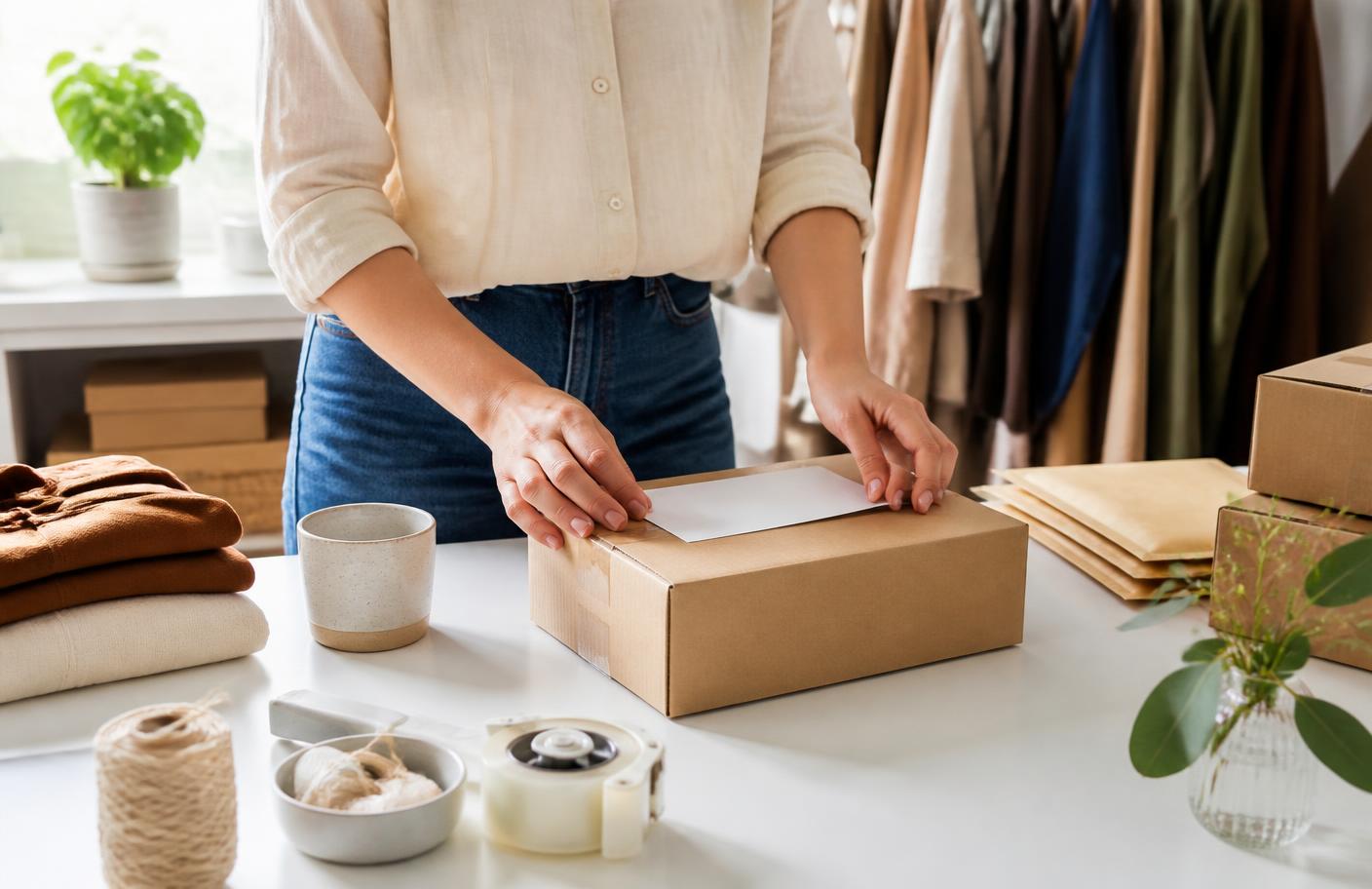
Ask your buyers to bring others. A note in the parcel, a follow-up email a week later or a small incentive for a referral turns the first ten happy customers into your cheapest marketing channel. Check local rules on incentives.


Trade-offs and checks
Ask for reviews at the right moment. Send a short request after the product has arrived and been used. Make leaving a review quick, and never offer payment for positive feedback or edit what customers write.
Related reading: Marketplace vs Your Own Online Store: Which Is Better?

Use social media where your buyers actually are. Choose one or two platforms, not six. Share behind-the-scenes photos, short demonstrations and answers to common questions, and reply to every comment and message promptly.
Show the product in use. Short videos and clear photos of real use persuade better than polished adverts. Even a phone video in daylight can show size, texture and function in ways text cannot.
Reach out to small creators and bloggers in your niche. Offer a sample and let them give an honest opinion. Be clear that they are free to say what they think, and check the disclosure rules for gifted products.
Take part in local opportunities if your product suits them. Markets, community events, pop-up stalls and local groups let you meet buyers face to face. You also collect instant feedback on price, packaging and what people ask.
Before you decide where to spend your time, pick two or three routes, not ten. Doing a few things consistently for a month beats a scattered effort across everything. Choose the routes closest to where your buyers already are.
Track what happens. Note where each visitor, enquiry and order comes from, even in a simple spreadsheet. After a few weeks you will see which route brings real buyers and which brings only compliments.
Set weekly targets that you can control. Examples include five helpful forum replies, one published guide, ten partner messages and a follow-up email to every buyer. Targets focused on activity keep you moving while results build.
Making your next decision
Be realistic about timing. Free routes usually take longer than ads to show results, and early sales may be small. Judge progress by the number of real conversations and repeat interest, not just revenue in the first weeks.
Make the most of every conversation. When someone asks a question about your product, answer fully, then ask what they were hoping to find. Their reply shows you what to change in your listing, your pricing or your description.
Offer a simple first-order incentive if your margin allows it. A small welcome gift, free delivery threshold or early-access offer can tip a hesitant buyer. Decide the limit in advance, and confirm it does not erase your profit.
Keep a list of everyone who showed interest. Note who asked a question, who joined your list and who said no, with their reason. A polite follow-up message a few weeks later often turns interest into a first order.
Look closely at the first buyers you win. Ask how they found you, why they chose you and what nearly stopped them. Their answers show which route to repeat and which wording to use on your pages.
Keep your store ready for the visitors you earn. Make sure product pages are clear, checkout works on a phone, and your policies are visible. Free traffic is precious, and it is wasted if the store loses it.
Related reading: How to Find Products to Sell Online Before You Spend Money
Only once something here produces steady sales should you add paid advertising. Then use ads to scale what already works, with a small budget and a clear target. Starting with proven messages makes each pound or dollar go further.
The verdict: your first customers come from effort, honesty and attention to a specific group of people. Choose a few free routes, be useful before selling, build an email list, and add ads only after something proves itself.


Chapter 03 · Key highlights & takeaways
Key highlights & takeaways
- Be useful in buyer communities before you mention your store.
- Useful guides keep bringing visitors long after publication.
- An email list is the only audience you truly own.
- Add paid ads only after free routes produce steady sales.
Watch out for: Follow each community's rules, never buy email lists and never pay for or edit customer reviews.
Practical steps
- Write one sentence describing your buyer and where they gather.
- Join two or three relevant communities and help for weeks.
- Publish one useful guide and add an email signup.
- Propose mention swaps and ask happy buyers for referrals.
People also viewed
Chapter 04 · Before you decide
Pros, cons & decision checklist
Pros, cons and who it suits
Pros
- ✓ Communities reward helpfulness, not promotion
- ✓ Guides keep working long after publication
- ✓ Email lists give you an audience you own
Cons
- – Follow each community's rules, never buy email lists and never pay for or edit customer…
- Best for
- Readers who can confirm this: You know where they gather online
- Skip if
- Follow each community's rules, never buy email lists and never pay for or edit customer…
Three checks to make before acting on this guide.
| Check | What good looks like |
|---|---|
| Buyer defined in one sentence | You know where they gather online |
| Email signup live on the store | Visitors can opt in to hear from you |
| Two or three routes chosen | Effort stays focused and results are tracked |
Verdict: start with the smallest reversible version, then expand using real results.

Chapter 05 · FAQ
Frequently asked questions
How long do free routes take to work?
Usually longer than ads.
Can I promote my store in forums?
Only where the rules allow.
How do I start an email list?
Add a simple signup offering early access or restock alerts.
What is a sideways partnership?
A swap of mentions with a non-competing seller who serves the same customer.
Should I offer referral incentives?
Small incentives can help, but check local rules on incentives and disclosure before offering them.
When should I begin paid ads?
After a free route produces steady sales.
Chapter 06 · Final verdict & next steps
Final verdict & next steps
Be helpful first and sell second.
Focus on two or three routes and track them.
Scale with ads only what already works.
Do this next
Your next steps
- 1Write one sentence describing your buyer and where they gather.
- 2Join two or three relevant communities and help for weeks.
- 3Publish one useful guide and add an email signup.
- 4Propose mention swaps and ask happy buyers for referrals.
Keep reading
Sources: official vendor pages where a product is mentioned. Last reviewed 15 September 2026; prices are not quoted here, so confirm current prices and terms on the official site.
What to do next
Pick the smallest useful step from this guide and complete it before adding another tool or plan.
Related guides
- How to Start an Online Store With No Money: Step-by-Step
- Marketplace vs Your Own Online Store: Which Is Better?
- How to Find Products to Sell Online Before You Spend Money
- Product Page Checklist: What Every Product Page Should Include
- Explore E-Commerce & Marketplaces
- Browse every Digital Business topic
- See the full index of guides
Akacen Media editorial team
Independent, practical publishing
Akacen Media covers online business, money, security and software. Guides combine careful research with practical checks, clearly marked partner links and no paid rankings.
About Akacen MediaHow we reviewContactYouTubePinterestInstagramTikTok
Some links on this page are affiliate links. If you sign up through them we may earn a commission at no extra cost to you.
Read more about who publishes this on the publisher profile.